Alp Lab Documentation

Welcome to the official documentation for Alp Lab. Here you'll find everything you need to build with E1M™ edge AI modules, the E1M open-standard form factor, and the ALP SDK.

What is E1M™?

E1M™ is an open-standard module-on-module (MoM) form factor for AI-capable embedded compute. It fixes the carrier-board pinout, mechanical envelope, and electrical interface of two LGA SoM sizes so that a single carrier board can host modules built around different MCU/MPU and AI-accelerator silicon, provided each module conforms.

  • E1M — 35 × 35 mm, 312 pads.
  • E1M-X — 45 × 65 mm, 496 pads.

The specification is published under CC BY-SA 4.0 so third parties can design conformant SoMs and carriers. See the E1M standard page.

What is the ALP SDK?

The ALP SDK is the unification software layer for ALP Lab edge AI modules built on E1M. It provides a single C/C++ API (<alp/...>) that works across every E1M SoM variant — present and future — by wrapping each vendor's SDK on top of ARM CMSIS.

Supported OS backends: Bare-metal · Zephyr RTOS · Yocto Linux, selected by a single declarative board.yaml at your project root.

ALP Lab module families

FamilySoC siliconForm factorAI throughputOS targets
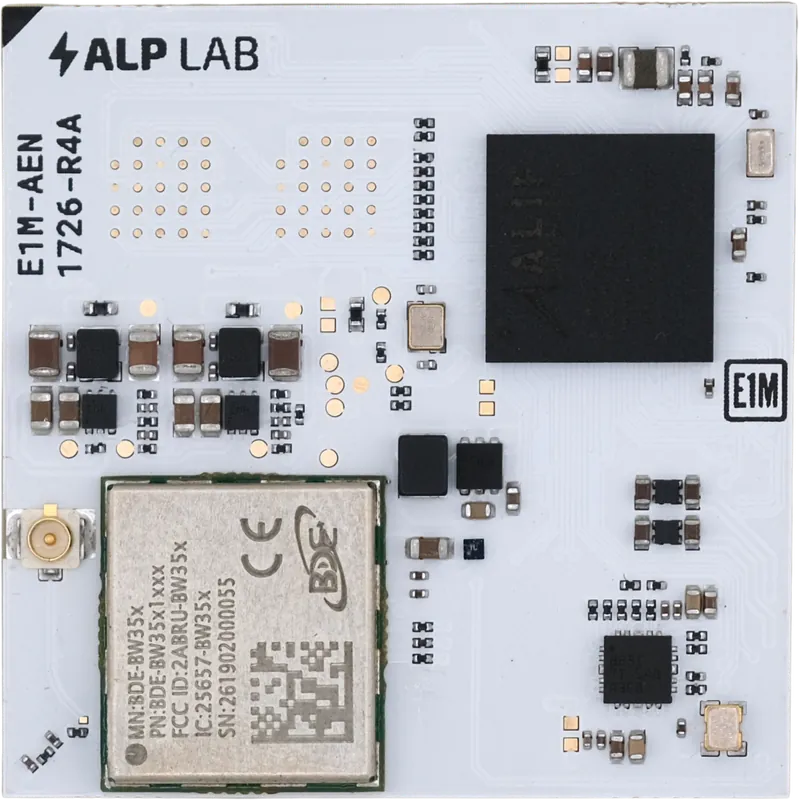
E1M-AENAlif Ensemble E3..E8E1M (35 × 35 mm)2× Ethos-U55 (all SKUs) + 1× Ethos-U85 on E4/E6/E8 (Transformer-capable)Zephyr · bare-metal
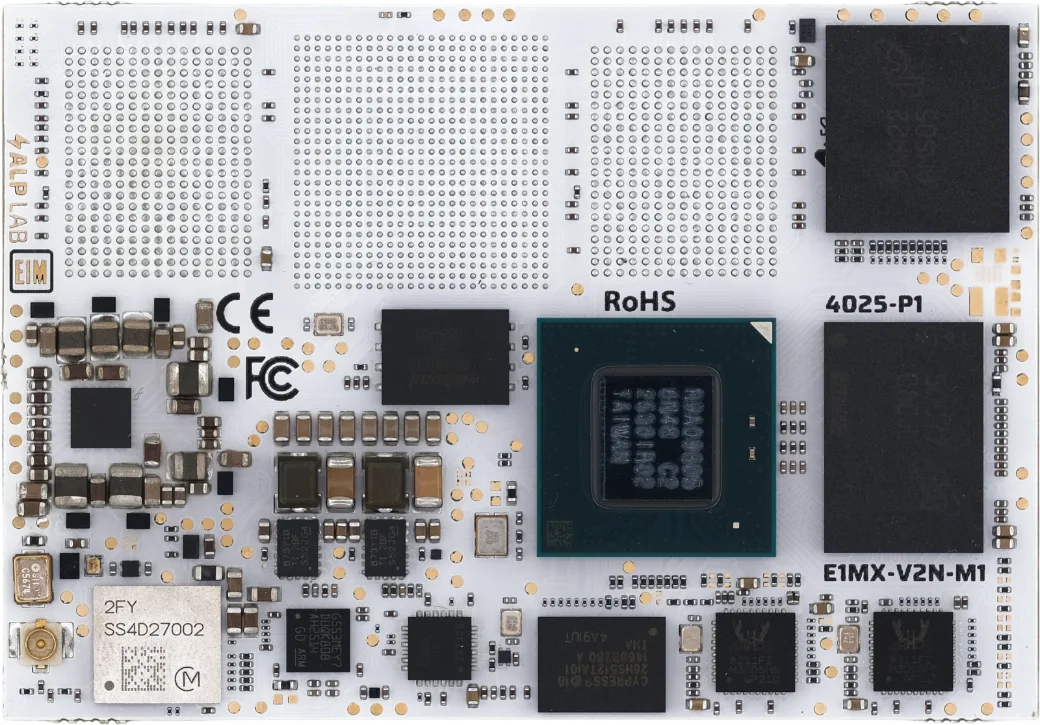
E1M-X V2NRenesas RZ/V2NE1M-X (45 × 65 mm)4 TOPS (DRP-AI3)Yocto · Zephyr
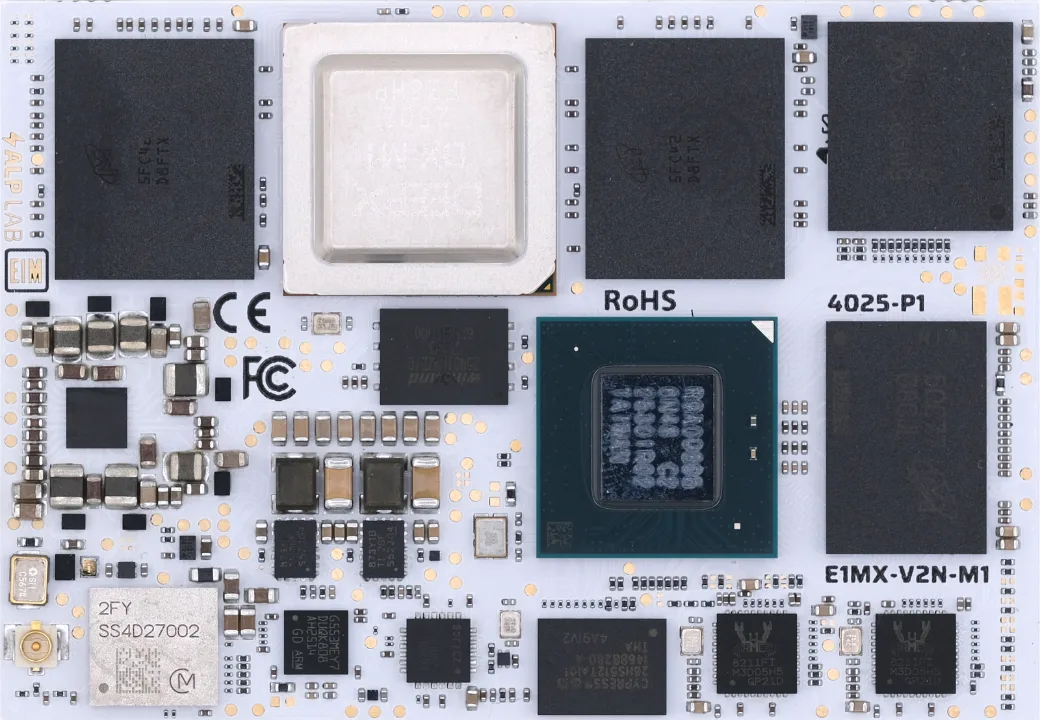
E1M-X V2N-M1RZ/V2N + DEEPX DX-M1E1M-X (45 × 65 mm)4 + 25 TOPSYocto
E1M-N93NXP i.MX 9352E1M (35 × 35 mm)~0.5 TOPS (Ethos-U65)Yocto
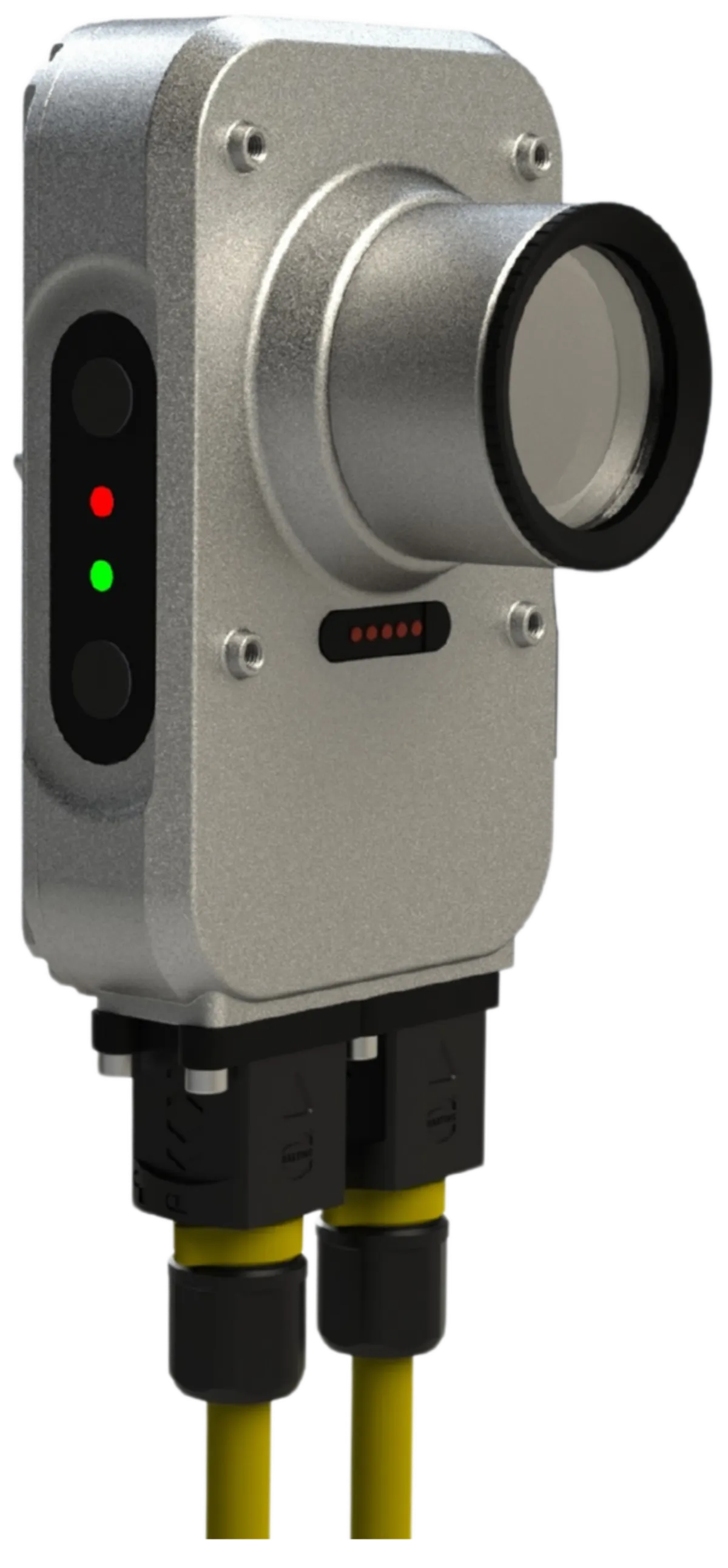
Industrial Edge-AI CameraRZ/V2N + DEEPX DX-M1enclosed system25 TOPSLinux

Two consumer paths

The SDK supports both flows equally — pick whichever fits.

  • Standalone / hand-written firmware. Write a Zephyr, Yocto, or bare-metal app directly against <alp/...> headers. Pick instance IDs from <alp/e1m_pinout.h> (E1M_I2C0, E1M_PWM3, …) and your app is portable across every E1M-conformant SoM. See the firmware quickstart.
  • alp-studio codegen. The Studio reads block manifests, runs the pin allocator against the active SoM, and emits C that calls the same <alp/...> API. Pin-allocation correctness comes for free.

The standalone path is not a Studio escape hatch — it's a first-class consumer.

Questions about this page? Discuss in Community Forum